

NUOVO GRAND TOUR
SOFIA ROSALIA FIORAMONTI
SEASON 2025
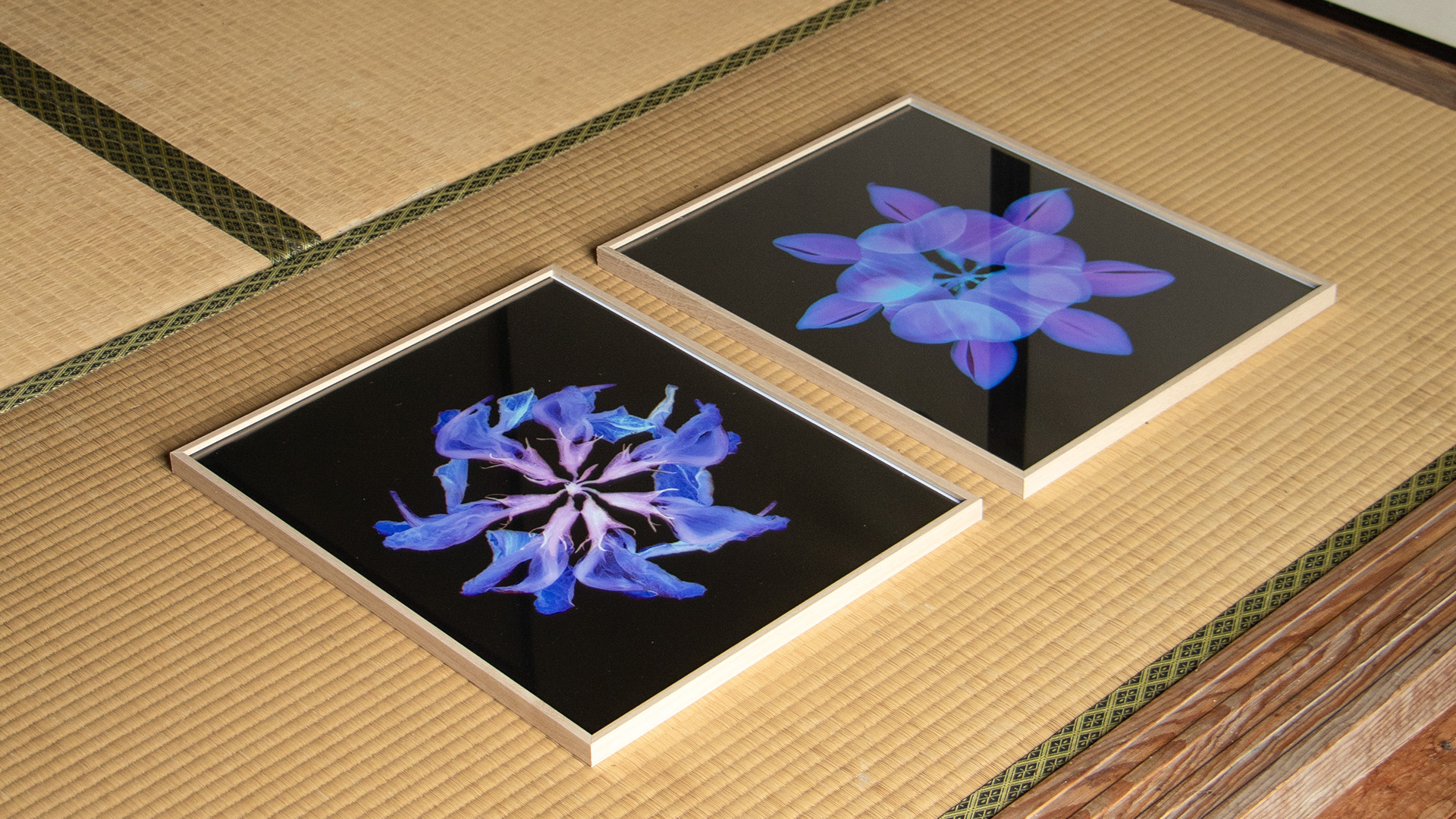
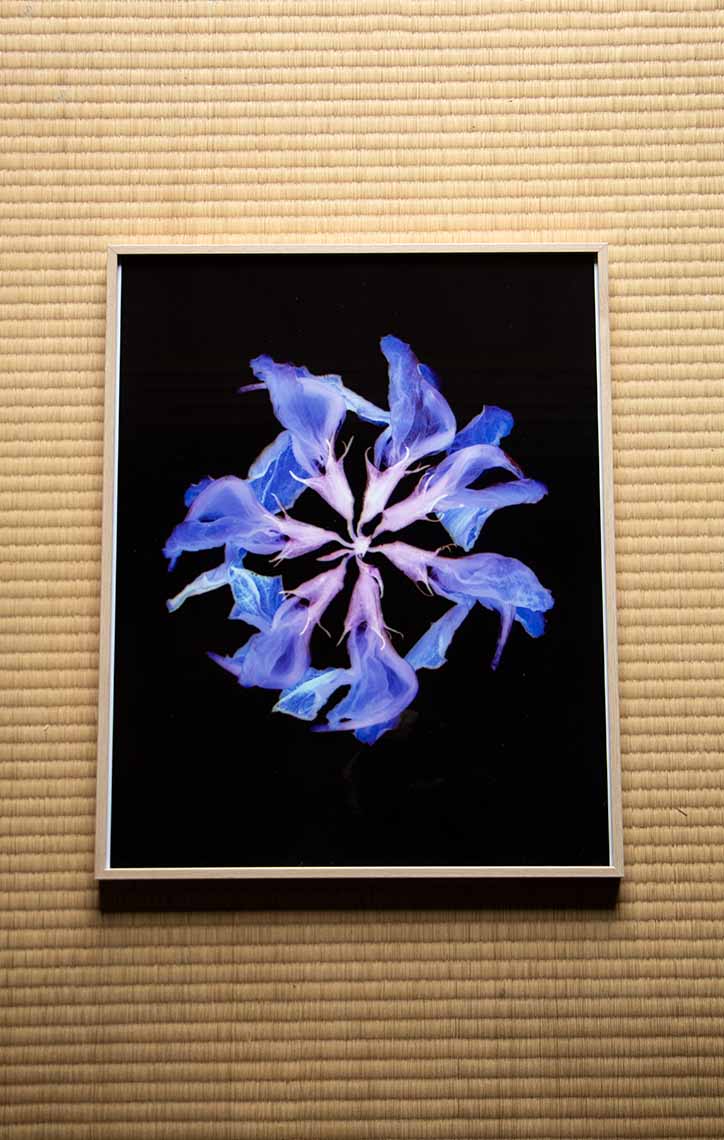
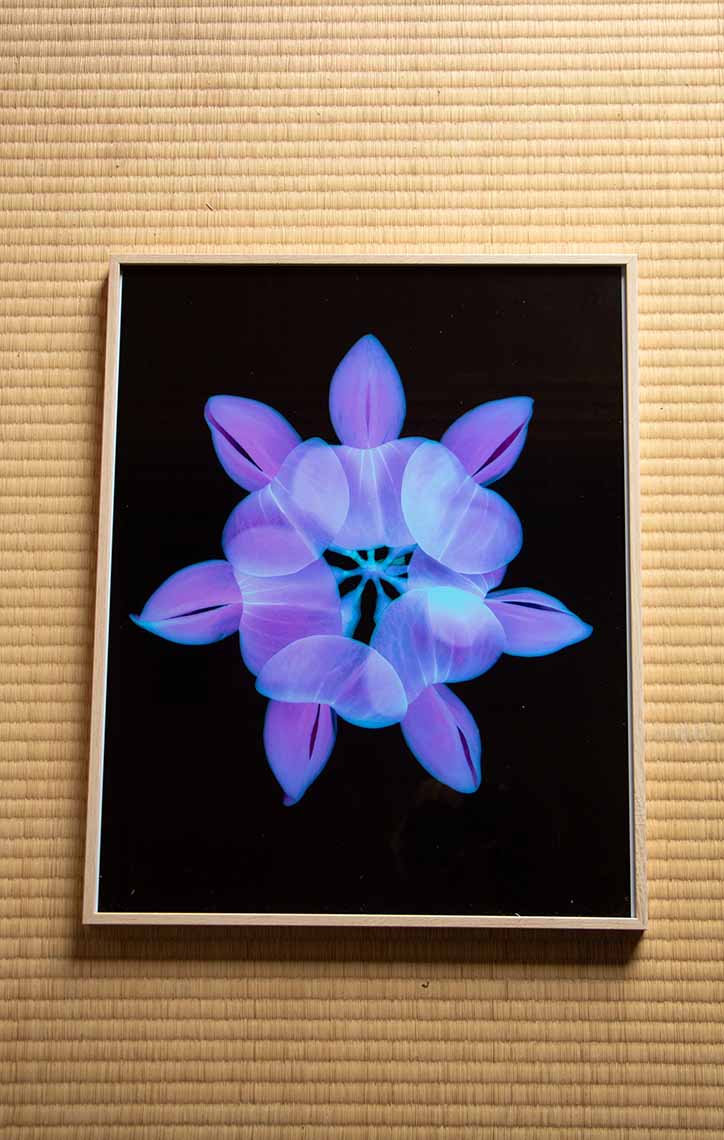
Sofia Rosalia Fioramonti is a multidisciplinary artist working between photography, video, and painting, whose practice moves between documentary language and visual poetry. She is interested in the relationships between body, territory, and memory, and in how intimate experience can expand into something collective. During her residency, she developed a project titled Ephemera, centered on the life cycle of flowers, from blooming to dissolution.
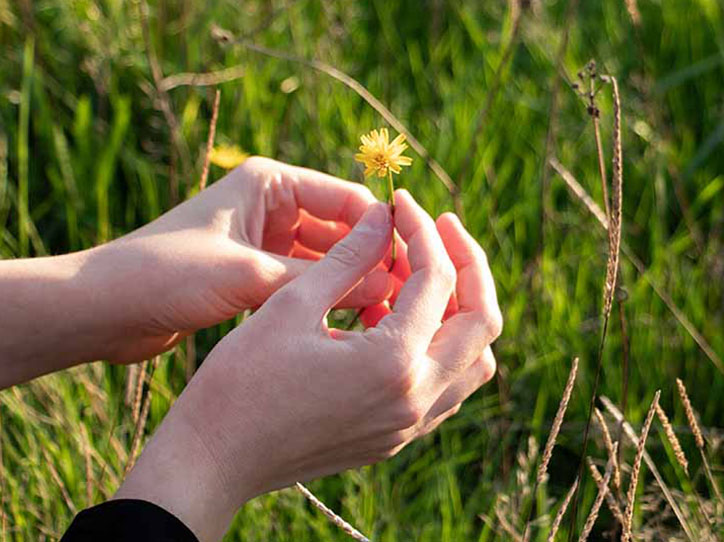
The context of Boisbuchet had a profound impact on the direction of her work. Surrounded by nature, architecture, and design, she became increasingly attentive to small, fragile presences within the landscape. She began collecting flowers that were already in transformation, some still vibrant, others beginning to fade. She was drawn to that suspended moment in which beauty and decay coexist.
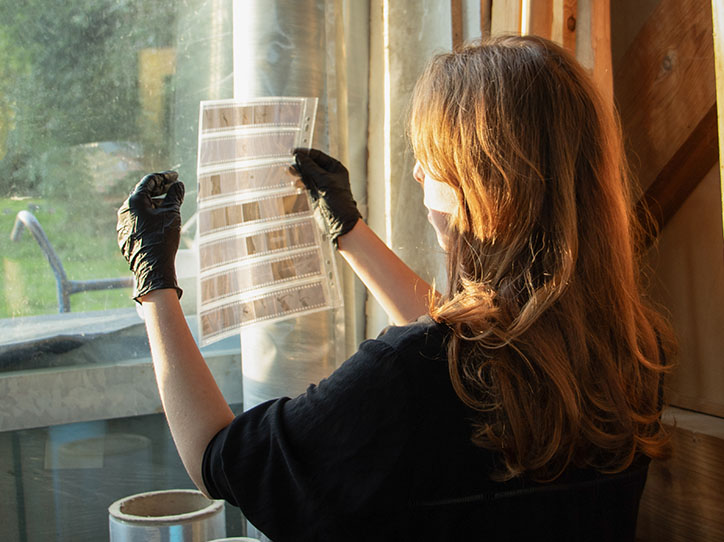
To document this process, she used a negative scanner instead of a camera. The scanner allowed her to record each subtle shift in texture and color, making time itself visible as a living material. The act of scanning became slow and almost ritualistic. Rather than searching for a decisive moment, she focused on duration, on the gradual passage from presence to disappearance. The flowers began to resemble bodies, fragile entities undergoing inevitable change.
The final work took the form of a dual-channel video installation. The metamorphosis of the flowers was interwoven with verses from Book XV of Ovid’s Metamorphoses, particularly the line “Omnia mutantur, nihil interit.” The soundtrack, Tape 23 Track 4 by Ahmed Malek and Natureboy Flako, introduced a subtle rhythm that accompanied the visual transformation. Together, image, text, and sound created a meditation on impermanence and continuity. The project reflects on how nothing truly vanishes, but rather shifts form.
The residency experience was extraordinary on many levels. Working alongside artists who use different media expanded her perspective significantly. Daily conversations, shared meals, and informal exchanges became an essential part of the creative process. Observing how others approach material, space, and concept pushed her to question her own methods.
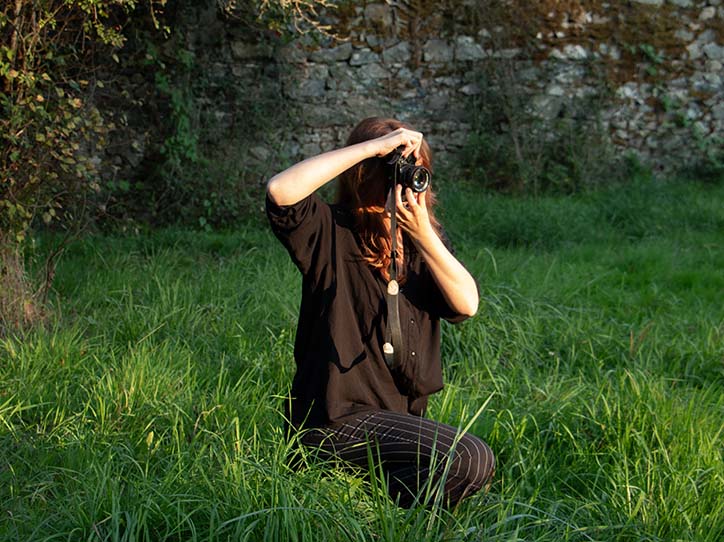
Boisbuchet also gave her the opportunity to step outside her creative comfort zone. Her background is strongly rooted in analog photography, which involves slowness and physical process. During the residency, she allowed herself to experiment more freely with video and installation, exploring time and transformation not only as subjects but as structural elements of the work. This shift felt necessary and liberating.
Equally important was the atmosphere of the residency itself. The curators, volunteers, and the entire team created an environment that felt generous and genuinely supportive.
“It is a rare space where creativity can unfold without pressure, and where research is valued as much as outcome.”
Photos : Manon Arrougé