Boro – The Fabric of Life
(Press release in English)
Boisbuchet’s annual summer exhibition features traditional Japanese patchwork.
Over recent years, the Domaine de Boisbuchet – internationally known for its prestigious workshops – has, each summer, shown a new and extraordinary exhibition related to design and architecture.
This year’s presentation, Boro – The Fabric of Life, and highlights traditional Japanese patchwork textiles. The approximately 50 blankets, bags, shirts, Kimonos, trousers and other clothing items in this show were mended by poor peasants from left-over, usually indigo dyed fabrics between 1850 and 1905. Whereas a few of them have been borrowed from Japanese collections in Kyoto and Tokyo, most come from the private collection of New York based gallerist Stephen Szczepanek. Mr. Szczepanek also contributes to this exhibition as co-curator alongside Mathias Schwartz-Clauss, Boisbuchet’s artistic director.

Until well into the 20th century, large parts of Japan were so poor that people could rarely buy textiles for clothing and bedding. In northern areas, cotton was especially precious and pieces of used fabric were purchased in order to patch-work them into clothing or duvets. Many of these textiles had been mended repeatedly from generation to generation without being thrown away. “Boro textiles were the domain of the ordinary man and represented a collective, impoverished past. They were largely forgotten after the mid-twentieth century when Japan’s society shifted towards mass-scale modernization and urbanization. However, they are the tangible embodiment of a cultural legacy which has only recently been accorded a formal name and has received critical consideration”, explains Mr. Szczepanek.
As a matter of fact, boro textiles represent some essential principles of traditional Japanese ethics and aesthetics such as the favoring of the sober and modest (shibui); imperfections expressed by irregularity, incompleteness, rawness and simplicity (wabi-sabi); and, of course, regret about any waste (motttainai). All of these characteristics attest to a respect for the singularity of things which opposes today’s consumption- oriented life patterns. Boro – derived from the Japanese onomatopoeic boroboro which means something rotten – thus demonstrates esteem for our available resources, labor and quotidian objects.
Moreover, the irregularly patched boro textiles feature a stunning similarity to modern art's collage aesthetics, reminding today’s viewer of works by artists Paul Klee and Robert Rauschenberg or Brazilian designers Fernando and Humberto Campana. More and more, actual art and design history discover the collage principle of assembling a work from bits and pieces of other existing works as a fundamentally modern and contemporary pattern of everyday perception and artistic practice. Boro – The Fabric of Life therefore reflects a fairly unknown chapter of craft history as a valuable source of inspiration for today’s designers, artists, aficionados and, last but not least, us as consumers.
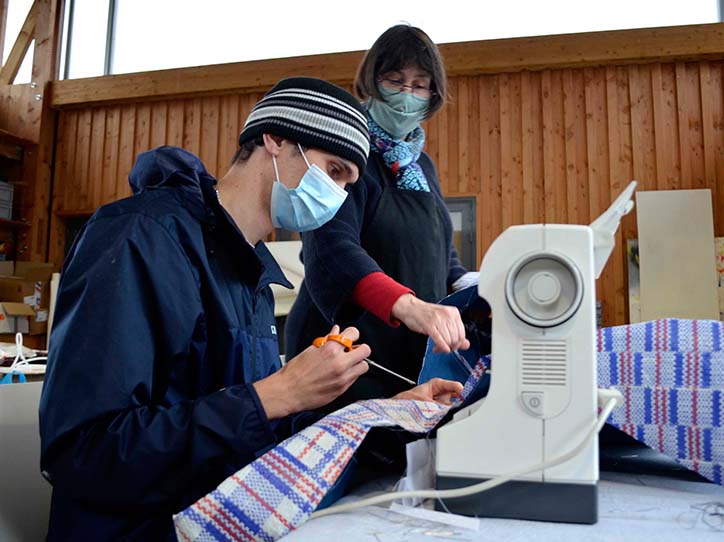
To concludethis exhibition, the curators confront traditionalborotextiles with thepresent by adding a couple of clothing items that havebeen mended withworn-out and left-over textiles, usinga very similar technique. These colorful and often wildly patterned shirts, jackets or skirts are fabricated by Bangladeshi women,finding a way out of quasi-slavery in highrise textile factories, whichhaverecently become known as deathtrap work environments. Supported by German architect Anna Heringer, who is leading one of Boisbuchet's workshops this summer, they founded their own cooperative producing clothing which adds a realistic social meaning to thevintage look that responds to our need for authenticity.
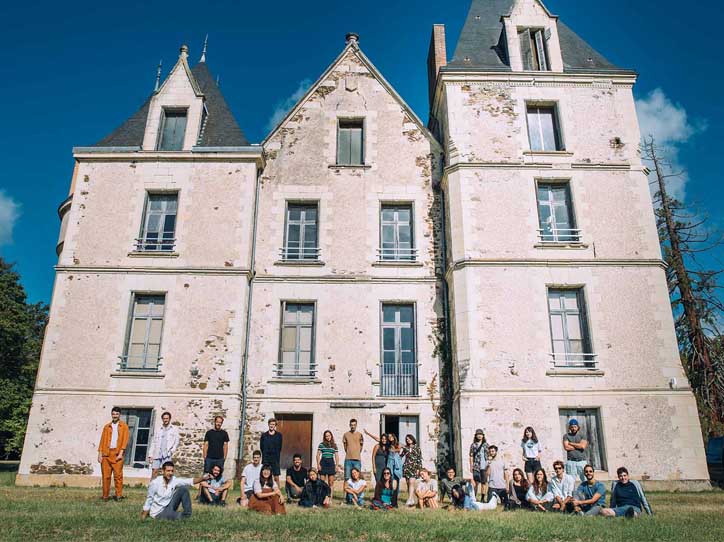
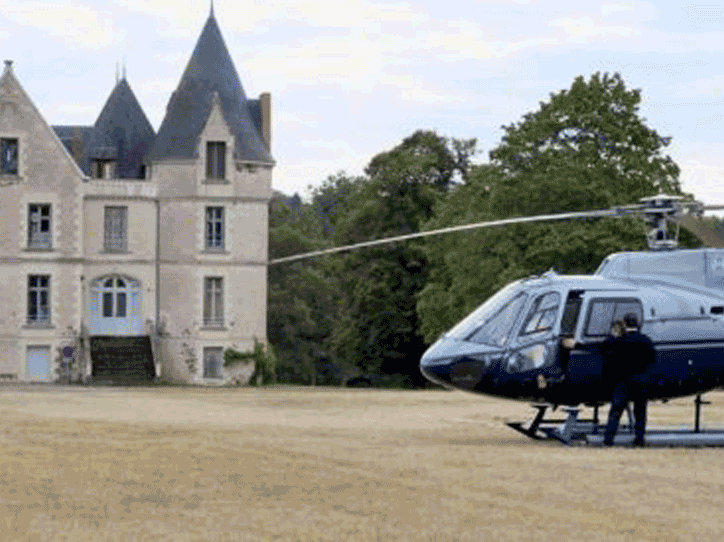
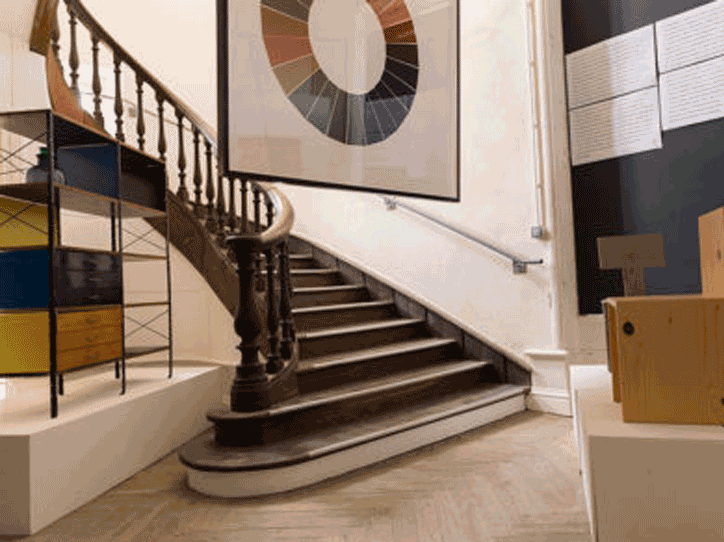
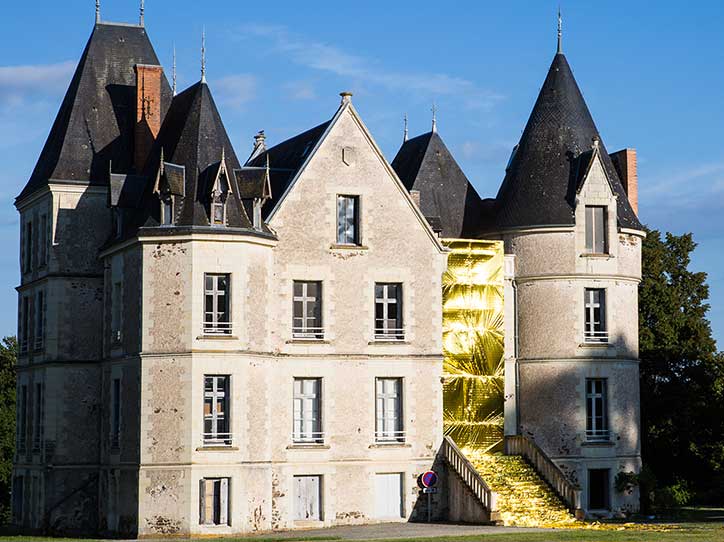
The exhibition is designed in cooperation with Parsons The New School for design, New York, and presented in the 19th century castle of the Domaine de Boisbuchet in Lessac from June 7th until September 15th.

Boro – The Fabric of Life
An exhibition of the Domaine de Boisbuchet
Curators: Mathias Schwartz-Clauss and Stephen Szczepanek
Assistant Curator: Christian J. Altherr
Initiative: Ayako Kamozawa
Exhibition Design: Parsons The New School for design, New York
Press contact:
marie de cossette
independant pr
cell / +33 6 31 75 06 24
skype / marie de cossette
77 rue de vaugirard, paris 6e france
This email address is being protected from spambots. You need JavaScript enabled to view it.
2012 Exhibitions 24.6—22.9.2012
This year, Boisbuchet presents two exhibitions on the theme of bamboo; one is centered on architecture and is comprised of an open air walking tour of the domain and the second features the work of an artist who utilizes the unique character of this material within the Boisbuchet chateau.